Apang Manav Mandal
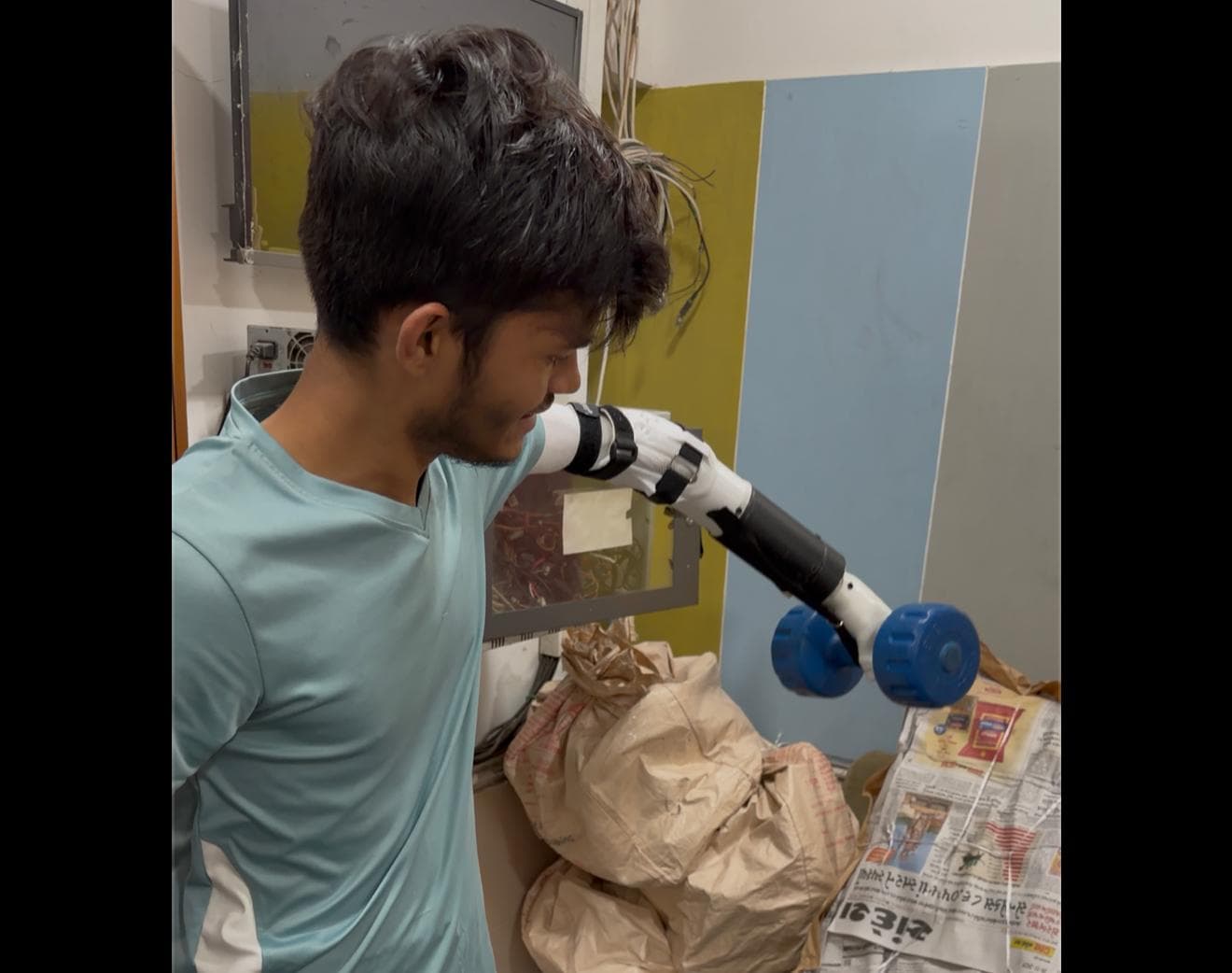
We partnered with Apang Manav Mandal, a charitable organisation for persons with disabilities, and the Composite Regional Centre (ALIMCO) to conduct a pilot clinical study fitting 15 transradial amputees. This charity-driven project validated our 5-phase clinical process and our approach to understanding patient needs.
15+
Patients Assessed
Transradial amputees in study
5
Clinical Phases
Structured assessment process
21–61
Age Range
Diverse participant demographics
<24hr
Print Time
Scan to finished device
Charity Partnership
Apang Manav Mandal is a charitable organisation in Gujarat dedicated to serving persons with disabilities. Together with the Composite Regional Centre (ALIMCO), a government-run rehabilitation facility, they provided the clinical setting and oversight for our pilot study.
All participation was completely voluntary and free of cost. Information materials were provided in Hindi and Gujarati, and written informed consent was obtained from every participant before sessions began.
Our 5-Phase Clinical Process
Phase 1: Initial Consultation — Briefing on the study, presentation of informational pamphlets in Hindi and Gujarati, signed informed consent, and medical history discussion.
Phase 2: Clinical Assessment — Detailed questions about amputation history, pain areas, phantom limb sensations, top 5 functional goals for a prosthetic, and any previous prosthetic experience.
Phase 3: 3D Scanning and Measurements — Precise 3D model capture of each residual limb, key circumference measurements at multiple points, length measurements, and anatomical documentation.
Phase 4: Socket Design Generation — Scan data uploaded to Akrolimb software, custom socket designed and generated, suspension mechanism selected, and hand attachment chosen based on the patient's goals.
Phase 5: Fitting and Feedback — Initial fitting under clinical supervision, comfort and suspension assessment, movement and function tests, user feedback collection, and photography documentation.
Understanding Patient Needs
15 participants were assessed during the study (ages 21 to 61, 73% male, 27% female). Time since amputation varied from congenital to 21+ years, giving us a diverse cohort with very different anatomical and lifestyle needs.
Many participants had previously tried traditional prosthetics but abandoned them due to heavy weight (often 1–2kg+), poor socket fit, limited practical function, and non-breathable materials. Understanding these pain points shaped every design decision we made.
Several participants presented with extremely short residual limbs (less than 5cm below elbow), requiring us to develop external bicep support mechanisms — a challenge that pushed our design capabilities forward.
Study Outcomes
The pilot validated that our 3D scanning, software design, and 3D printing workflow can deliver custom-fitted prosthetics within 24 hours of a patient's first consultation — compared to weeks or months with traditional methods.
Total device weight under 700g dramatically reduced fatigue. Custom-fitted sockets distributed pressure more evenly, and modular hand attachments enabled activities patients had thought impossible.
Clinical learnings around heat management, phantom limb pain accommodation, and varied anatomies directly informed our software design tools and are built into our platform today.
Want to Work With Us?
Whether you need custom O&P design services or want to bring 3D printing into your clinic, we'd love to hear from you.